



NET
DDoS Traffic Defense
High-volume and abusive network traffic is confronted at the perimeter instead of being treated like ordinary application workload.
Network Perimeter Active
Before traffic reaches your hosting account, Fusion Arc Hosting surrounds it with multiple security boundaries designed to inspect, filter, isolate, contain and recover. DDoS mitigation, Imunify360 firewall and WAF inspection, CloudLinux CageFS isolation, malware detection, automated cleanup, email protection and offsite recovery work together as one security architecture.
Serious hosting security assumes threats can arrive through more than one path. Fusion Arc Hosting stacks independent defensive controls so malicious activity must survive multiple security boundaries before it could ever reach a hosted application.
High-volume and abusive network traffic is confronted at the perimeter instead of being treated like ordinary application workload.
Suspicious IP activity, automated abuse and hostile request behavior encounter server-side security controls before receiving normal access.
HTTP traffic is inspected for exploit patterns, malicious payloads and suspicious behavior before the request reaches WordPress, PHP or another CMS.
Website files can be scanned for malicious code, compromised scripts and other indicators of an infected hosting account.
Hosting accounts operate within isolated filesystem environments so customers do not receive unrestricted visibility into neighboring accounts.
Outbound email protection helps contain malicious or abusive sending behavior originating from compromised mailboxes, scripts or hosting accounts.
Legitimate customers should reach your website. Exploit attempts, abusive automation and malicious requests should not. Traffic is evaluated before it continues toward the hosting account and application.
Distributed denial-of-service attacks attempt to overwhelm infrastructure by converting traffic volume into resource exhaustion. DDoS protection is positioned ahead of the application layer so hostile traffic does not automatically become website workload.
Vulnerable plugins, compromised credentials and malicious uploads can place hostile code inside an individual website. Security therefore continues beyond the network and application boundary into hosted account files.
When malicious files are detected, automated cleanup capabilities can remove the infection rather than simply generating an alert and leaving the compromised file behind.
Shared hosting does not need to mean one giant shared security context. CloudLinux separates customer environments so activity can be contained to the account where it belongs.
Website security does not stop at HTTP traffic. A compromised WordPress installation, mailbox or PHP script can attempt to send malicious or unsolicited email. ImunifyEmail works alongside outbound sending controls to help contain abuse before one source becomes an infrastructure-wide reputation problem.
Prevention matters, but security also needs a plan for what happens after something goes wrong. Fusion Arc Hosting combines system patching, encrypted connections and independent recovery mechanisms into the same defensive model.
Eligible Linux kernel security fixes can be deployed without waiting for the next traditional reboot cycle, reducing the exposure window between a security fix and a protected running kernel.
PATCHING://LIVEAutomated SSL management helps keep supported domains encrypted over HTTPS so credentials, website forms and visitor traffic are not transmitted as ordinary plaintext.
TRANSPORT://ENCRYPTEDBackup copies maintained separately from the live hosting filesystem create an independent recovery path if website data becomes corrupted, deleted or compromised.
RECOVERY://OFFSITESecurity is stronger when every attack does not depend on one defensive control. Different threats are confronted at the point in the infrastructure where containment makes the most sense.
Network mitigation helps prevent abusive traffic from becoming normal application load.
Imunify360 firewall and WAF controls inspect and filter suspicious application traffic.
Malware security can identify malicious files residing inside individual website accounts.
CloudLinux CageFS establishes filesystem boundaries between separate hosting users.
ImunifyEmail and outbound sending controls help contain malicious email activity.
KernelCare reduces dependence on traditional reboot windows for eligible security patches.
SSL/TLS encrypts supported connections between visitors and hosted websites.
Offsite backups provide an independent restoration path outside the live filesystem.
The website, operating system, network and recovery architecture are separate parts of the same security problem. Fusion Arc Hosting carries the defensive model through the infrastructure underneath your hosting account.
Network-layer mitigation designed to reduce abusive and high-volume attack traffic before it reaches hosted workloads.
Server-side firewall protection designed to identify and restrict hostile access patterns.
Web requests are inspected for exploit signatures, malicious payloads and suspicious behavior.
Repeated authentication abuse can be identified and restricted rather than receiving unlimited attempts against protected services.
Suspicious server activity and repeated hostile patterns can be identified and blocked before they develop into unrestricted access attempts.
Security continues beyond static filtering with additional protection aimed at malicious behavior deeper inside application execution.
Website files can be scanned for malicious code and known infection patterns residing inside hosted accounts.
Detected website malware can be cleaned automatically, with customer opt-out control available for the cleanup feature.
Each hosting user receives a restricted filesystem view designed to isolate customers from neighboring hosting accounts.
Account-level resource boundaries help prevent one hosting account from freely consuming the entire shared environment.
Outbound email protection helps identify and contain malicious or abusive sending behavior originating from hosted services.
Sender, script, domain and hosting-account controls help constrain the blast radius of compromised email sources.
Eligible kernel security fixes can be applied while the operating system remains online.
Supported domains receive HTTPS encryption through automated SSL certificate provisioning and management.
Backup copies maintained away from the primary hosting filesystem create another recovery path from corruption, deletion or compromise.
RAID storage configurations reduce dependence on a single physical storage device while remaining separate from the backup strategy.
Websites, databases, mailboxes and application files remain tied to their own hosting account permissions and security context.
Protection is backed by operational recovery mechanisms so compromised content can be contained, cleaned and restored.
Put your website behind an architecture built around traffic defense, request inspection, account isolation, malware protection, outbound abuse containment, encryption, live security patching and independent recovery.
Fusion Arc Hosting uses Imunify360 across our Web Hosting, Reseller Hosting, Agency Hosting, and CMS Hosting plans, providing an integrated security platform designed to detect threats, block malicious activity, scan for malware, and protect websites around the clock.

Intelligent firewall protection continuously analyzes traffic and helps block malicious connections before they can threaten hosted services.
Suspicious web traffic can be filtered before reaching your website, helping defend against malicious requests and abusive activity.
Automated malware scanning and cleaning continuously checks hosted files for known and suspicious malicious code.
Imunify360 can identify dangerous PHP behavior while code executes, helping stop malicious activity before it causes damage.
Modern website security requires more than a firewall. Imunify360 combines multiple security technologies into one integrated defense platform across supported Fusion Arc Hosting environments.
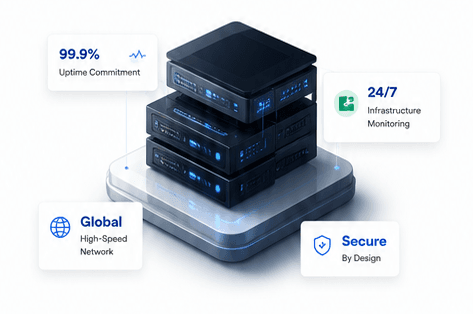
Attackers do not politely restrict themselves to business hours. Imunify360 continuously analyzes activity across the server and can automatically respond when suspicious behavior, malware, brute-force attempts, or exploit patterns are detected.
Server logs and activity are continuously analyzed for patterns associated with attacks and suspicious behavior.
Repeated failed login attempts, brute-force behavior, and other suspicious activity can trigger automatic blocking of offending IP addresses.
Protection extends beyond individual websites, helping secure services and applications operating throughout the hosting environment.
Security systems operate continuously, allowing threats to be detected and addressed without waiting for someone to manually notice them.
Security protection is included across our Web Hosting, Reseller Hosting, Agency Hosting, and CMS Hosting plans.
The WAF analyzes incoming requests and helps defend websites against common exploits, malicious requests, and suspicious traffic.
Automated malware scanning helps identify compromised files and malicious code throughout supported hosting accounts.
Repeated failed login attempts and other suspicious patterns can be detected automatically, with offending IP addresses blocked when appropriate.
Imunify360 includes server-hardening technologies designed to strengthen the underlying hosting environment, not merely individual websites.
This provides security fixes for supported older PHP versions that are no longer maintained by the original PHP developers, helping protect legacy applications that cannot yet be upgraded.
Firewalling, traffic analysis, malware scanning, intrusion detection, and proactive defenses work together continuously across the hosting platform.
Suspicious PHP behavior can be detected while scripts are running, providing another defense against previously unknown or changing threats.